
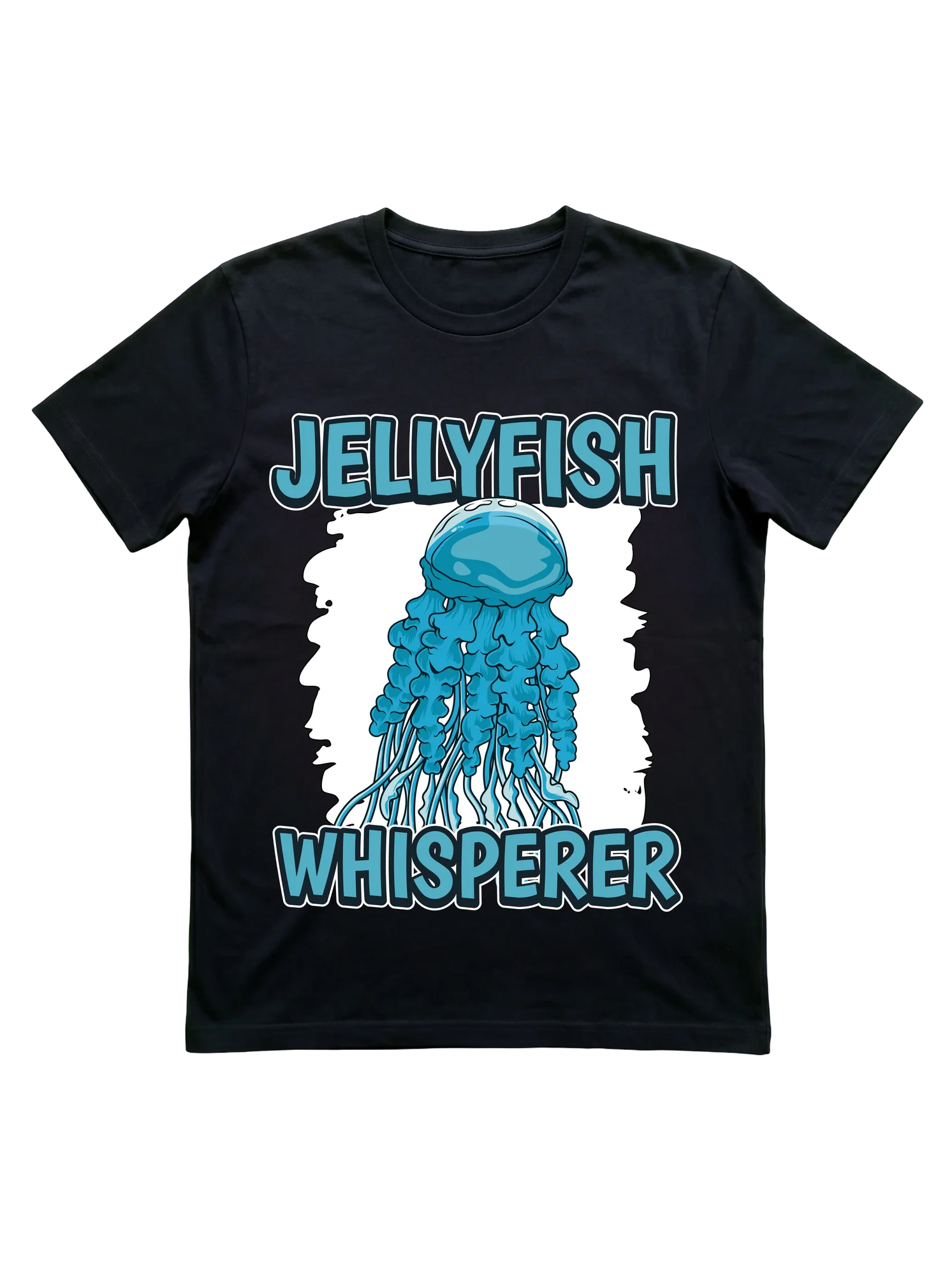
Jellyfish Whisperer T-Shirt for Keepers and Ocean Fans
As an Amazon Associate, HoldMyTee earns from qualifying purchases. This does not change the price for you. Learn more →
A detailed teal jellyfish floats inside a white brushstroke frame with ”Jellyfish Whisperer” in chunky outlined lettering on this tee, which signals fellow jelly keepers at aquarium meetups and ocean conservation events. Fits the jellyfish owner who leads every tank conversation.
Save to PinterestAbout this design
There is a specific moment in jellyfish keeping when the kreisel flow rate clicks and the jelly settles into a slow, even pulse. The Whisperer design puts that keeper-animal familiarity into text: JELLYFISH in large teal bubble-lettering at the top, WHISPERER in matching weight at the bottom, with a detailed blue jelly centered against a white paint-splash field on black. The bell carries translucent depth, the tentacles layer in braided curls, and the composition reads as a keeper's identity statement rather than an aquarium souvenir.
Who this is for
The Whisperer label lands as a self-aware joke for the jellyfish keeper who takes the hobby seriously but does not take themselves too seriously. That covers the home-tank keeper who monitors flow and brine shrimp feeding schedules, the marine biology student who knows the cnidarian classification by reflex, and the aquarium volunteer who has explained that jellyfish operate without a brain to visitors more times than they can count. It also fits the aquarist whose tank is the thing guests notice first and inevitably ask about.
Gift occasions
The design connects naturally to aquarium visits, where watching jellies drift in a darkened gallery tends to make the Whisperer identity feel accurate. World Jellyfish Day on November 3rd is the most direct seasonal window for anyone in the jellyfish-keeping community. Marine biology class settings are another natural fit, where claiming expert jellyfish communication lands among people who have spent lab hours on cnidarian anatomy and recognize the joke from the inside.
Why this design fits the niche
Jellyfish keepers use language around drifting, pulsing, the bell shape, and the rhythm of a healthy animal moving through clean water. The Whisperer frame applies that intimate familiarity to an animal most people do not associate with any kind of relationship, which is precisely why the joke reads as a niche signal. The teal coloring mirrors the blue-toned aquarium light that most tank photography uses, reinforcing the connection visually. On black, the print reads clearly at a distance, which is where recognition between two jellyfish enthusiasts typically happens.
Styling tips
Aquarium day trips are a natural context for this design, where the black base reads sharp under exhibit lighting. The teal typography stays legible outdoors on beach walks and coastal field days. It layers under an open flannel without losing the top lettering. The wide composition reads clearly at distance, making it practical at marine biology meetups and aquarium volunteer events.
How does this compare?
No sibling designs are yet available in the jellyfish hub for direct comparison. Within the broader jellyfish design landscape, the Whisperer layout occupies a specific position: large-format typography framing a detailed character illustration, rather than letting either element carry the composition alone. That pairing pushes it toward the louder, more statement-oriented end of the spectrum. Designs that run text-only register from farther away; illustration-only designs reward closer inspection. This format splits that difference by making the identity label legible at a distance and the illustration a secondary reward for anyone who stops to look. In a hub where designs tend to lean one direction, this one holds both registers at once.
This comparison reflects our editorial picks for the niche.
Related in this hub
- This Girl Loves Jellyfish T-Shirt for Young Ocean Lovers
- Best Jellyfish Dad Ever T-Shirt for Tank Keepers
- American Flag Jellyfish Mom T-Shirt for Ocean Lovers
- Blue Jellyfish Art T-Shirt for Ocean Lovers and Aquarists
- Jellyfish Dad T-Shirt with American Flag for Aquarist Dads
- Best Jellyfish Mom Ever Retro T-Shirt for Aquarists
Frequently asked questions about Jellyfish shirts
- What's the difference between a jellyfish, a sea jelly, and a jelly?
- Jellyfish is the historic everyday term and still the highest-volume search word. Sea jelly is the biologically preferred phrase used by public aquariums like Monterey Bay, since jellyfish are not actually fish. Jelly (singular) and jellies (plural) are the affectionate slang used inside the keeper community on Reddit and in r/jellyfishcare threads. T-shirt designs draw from all three registers depending on who they are speaking to, scientific, casual, or insider.
- Why do some jellyfish t-shirts say 'sea jelly' instead of 'jellyfish'?
- Sea jelly signals biological accuracy and aquarium-community membership. The largest public aquariums shifted to sea jelly and sea jellies in their gallery signage years ago, since the medusozoa subphylum has no relation to fish. Wearing a sea-jelly-labeled design reads as a small marker of marine-literacy among aquarium volunteers, docents, and biology-student audiences. Designs with the older jellyfish wording stay more popular with casual wearers and the broader ocean-lover audience.
- Are moon jellies and lion's mane jellies different design subjects?
- Yes, and the keeper community treats them as distinct visual subjects. Moon jellies (Aurelia aurita) show four horseshoe-shaped gonads through a translucent bell and have very short tentacles, producing a clean minimal silhouette. Lion's mane jellies show a heavily ruffled oral-arm cluster and very long trailing tentacles, sometimes called floof for that reason. A design featuring one is not interchangeable with the other, and species-specific shirts often signal which subgroup of the niche the wearer cares most about.
- What style of jellyfish t-shirt suits an aquarium volunteer or marine biology student?
- These audiences typically favor the science-illustration register over humor-text. Look for designs with anatomical accuracy: a bell with clearly drawn radial canals, identifiable oral arms, and tentacles in the right relative length for the species shown. Field-guide style with labeled parts lands particularly well. Watercolor-soft and abstract-drift designs work too, but labeled or species-named designs read as more deliberate within marine-biology classroom and aquarium-docent contexts.
- How should the design fit for a home jellyfish keeper?
- Home keepers tend to gravitate toward species-specific designs that match what they actually run in their tank, most often moon jelly given the species' tolerance of home kreisel setups. Insider-vocabulary designs using bell, pulsing, or jellies translate well, since these terms come up in keeping forums daily. The humor register (brainless and fabulous, no bones no problem) lands with keepers who lean self-ironic about their hobby and like a conversation-starting design at meetups.
- Which jellyfish t-shirt design works for someone who mainly snorkels?
- Snorkeling audiences lean toward designs that capture the in-water encounter rather than the aquarium-tank framing. Bell-and-drift compositions read well, especially in soft tropical-water palettes. Species choice matters less here than overall mood, since snorkelers often see jellies in passing rather than studying species. Designs that suggest the drift, pulse, and just-keep-drifting mindset tend to outperform anatomy-heavy prints with this audience, which sits adjacent to the broader ocean-lover and sea-life-enthusiast space.
- Do jellyfish t-shirts work outside of beach and aquarium contexts?
- Yes, and the niche audience wears them well beyond the obvious settings. Minimal-silhouette and verbal-text jellies translate to office-casual and weekend wear, especially in muted palettes. The mesmerizing-drift and float-through-life angle gives the designs a mindfulness-adjacent read that lands at yoga studios, coffee-shop meetups, and marine biology classroom settings. Bolder bioluminescent and species-anatomy designs read more like statement pieces and tend to surface at aquarium events, scuba-club meetups, and ocean documentary watch parties.
Also in
You might also like
 Vitruvian Jellyfish T-Shirt for Marine Biology FansJellyfish
 Cute Jellyfish Kids Shirt for Little Ocean ExplorersJellyfish
 Nothing Beats Jellyfish Kids T-Shirt for Ocean FansJellyfish
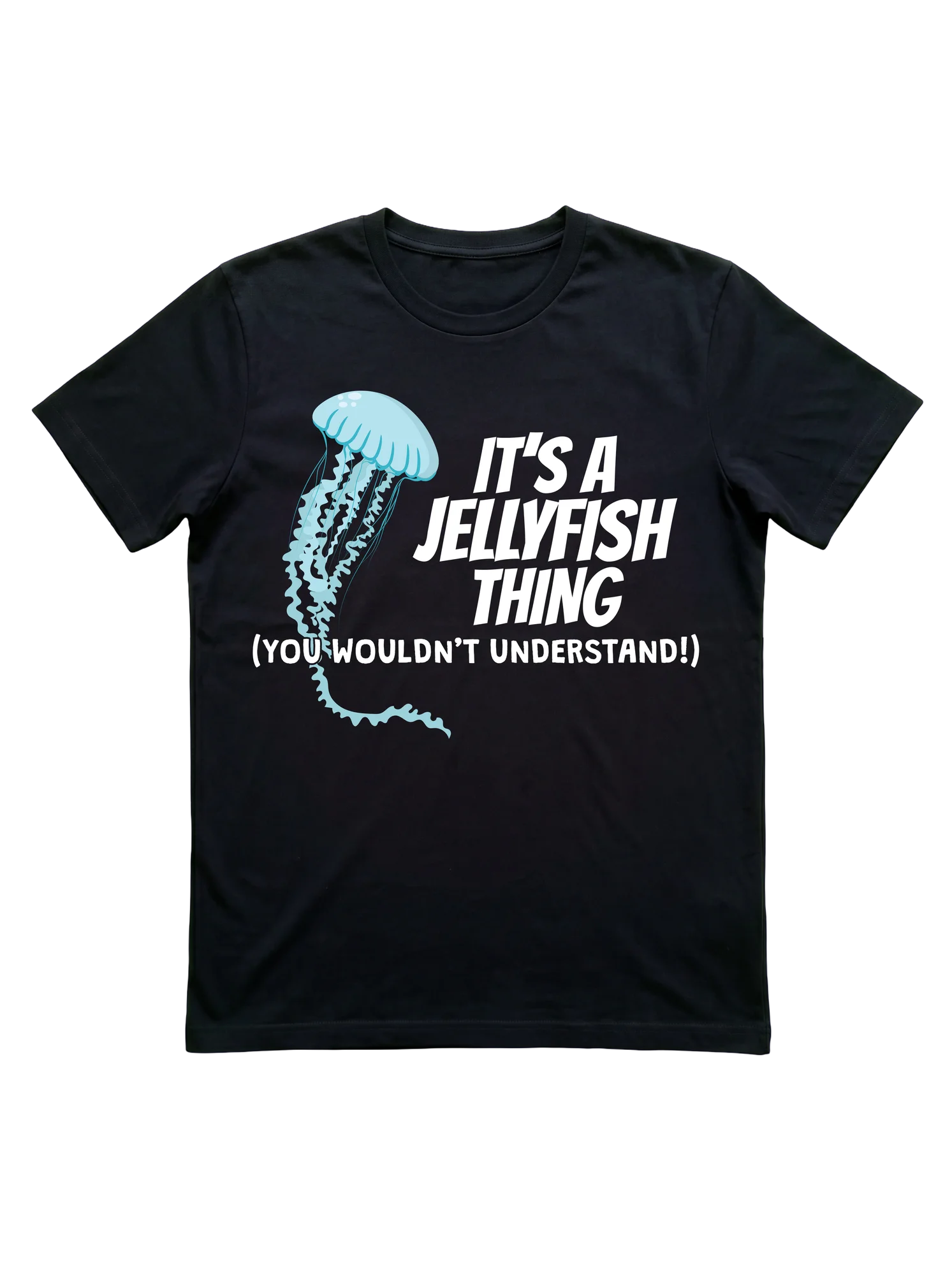 It's a Jellyfish Thing T-Shirt for Ocean LoversJellyfish
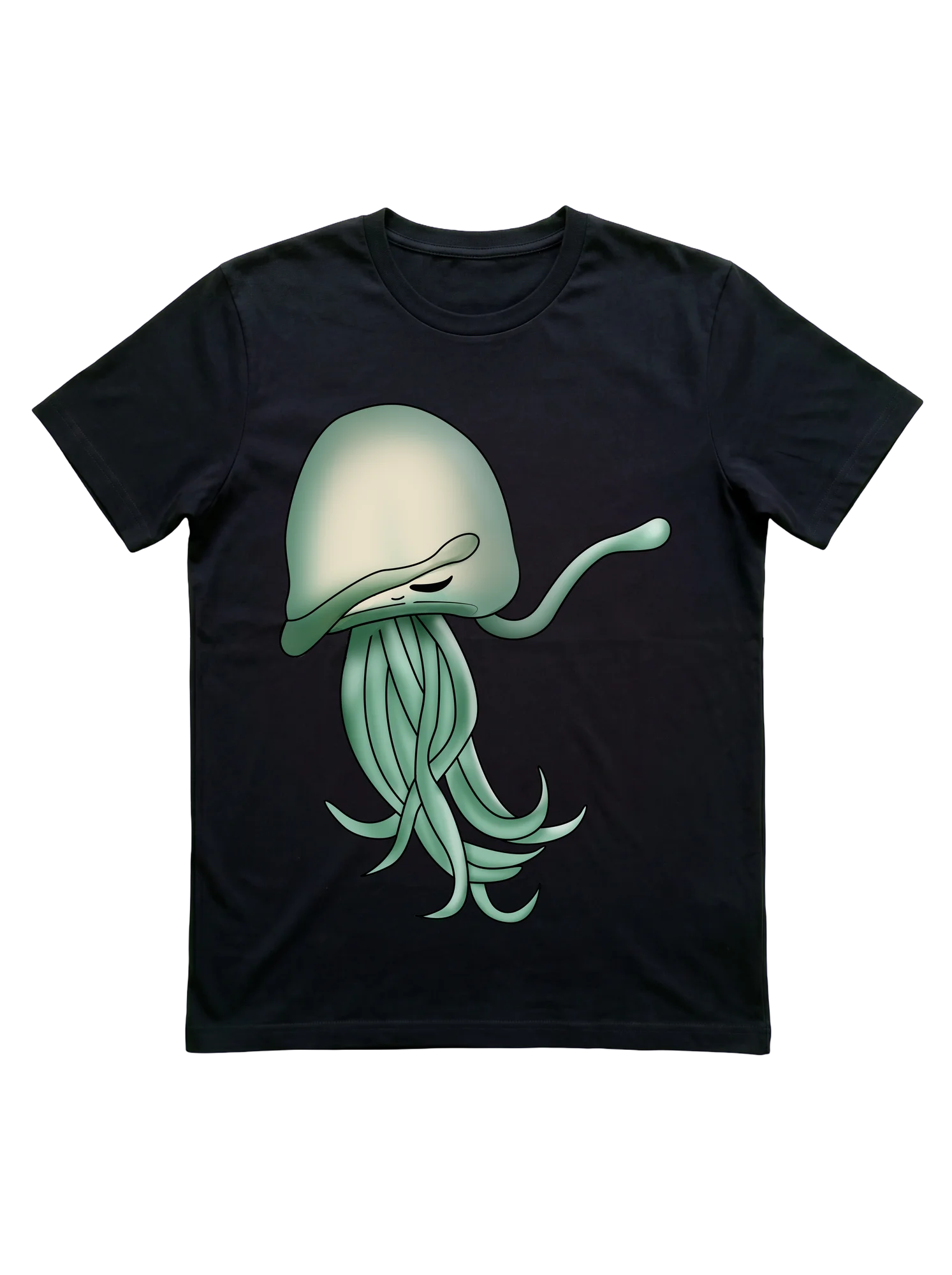 Dabbing Jellyfish Kids T-Shirt for Ocean LoversJellyfish
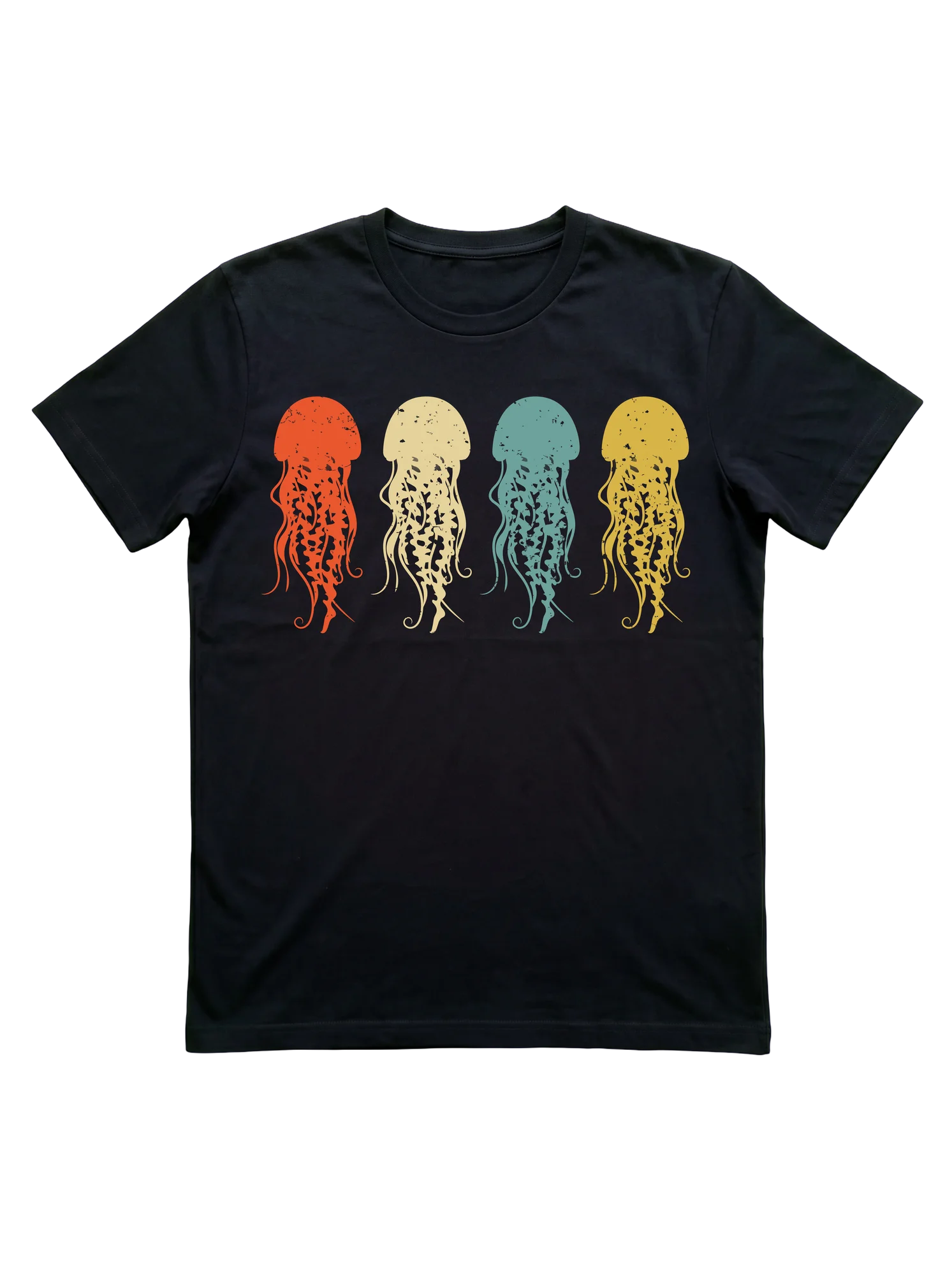 70s Vintage Jellyfish T-Shirt for Aquarists and Ocean LoversJellyfish