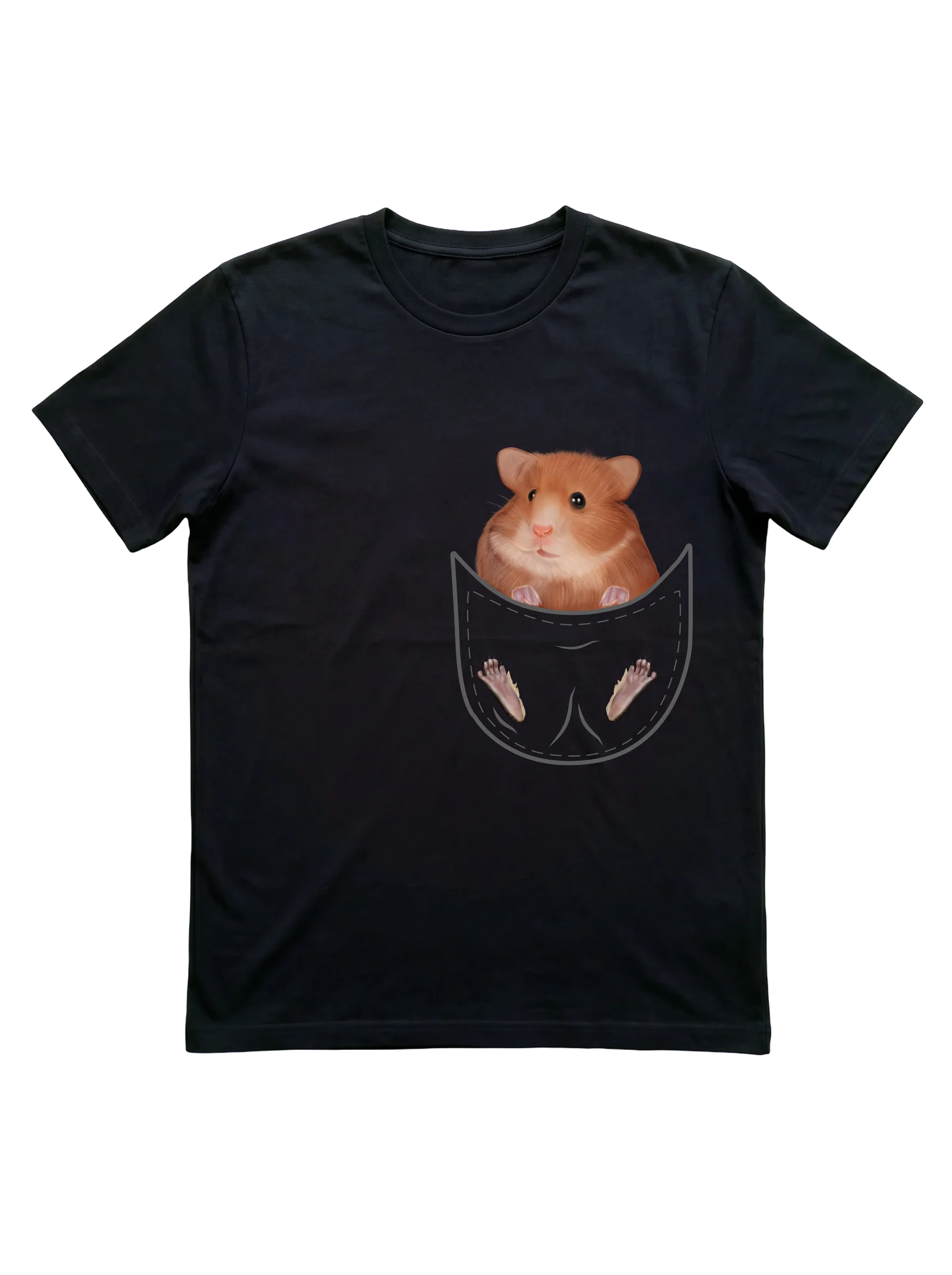
The photorealistic hamster pocket t-shirt that fellow small-pet owners spot first.
A photorealistic golden-brown hamster pushes face-first through a torn circular opening on dark gray fabric, front paws splayed below the frayed edge like a small Houdini mid-escape. The chest-centered composition keeps the illusion clean against the near-black ground, no text competing for attention. This shirt fits comfortably into a Saturday bedding-aisle browse at the pet store, where it earns slow double-takes from strangers and instant nods from anyone who has spent a weekend hamster-proofing a spare room. The torn-paper hole reads like a torn cage panel viewed from the outside.
- Stands out:
- The torn-fabric edge has visible thread-fray rendering, so the hamster appears to be pushing through real cloth rather than printed onto it.
- Worth considering:
- The high realism leans grown-up-quirky rather than playful, so it suits adult owners more than the kindergarten-pet-week crowd.
- Right for:
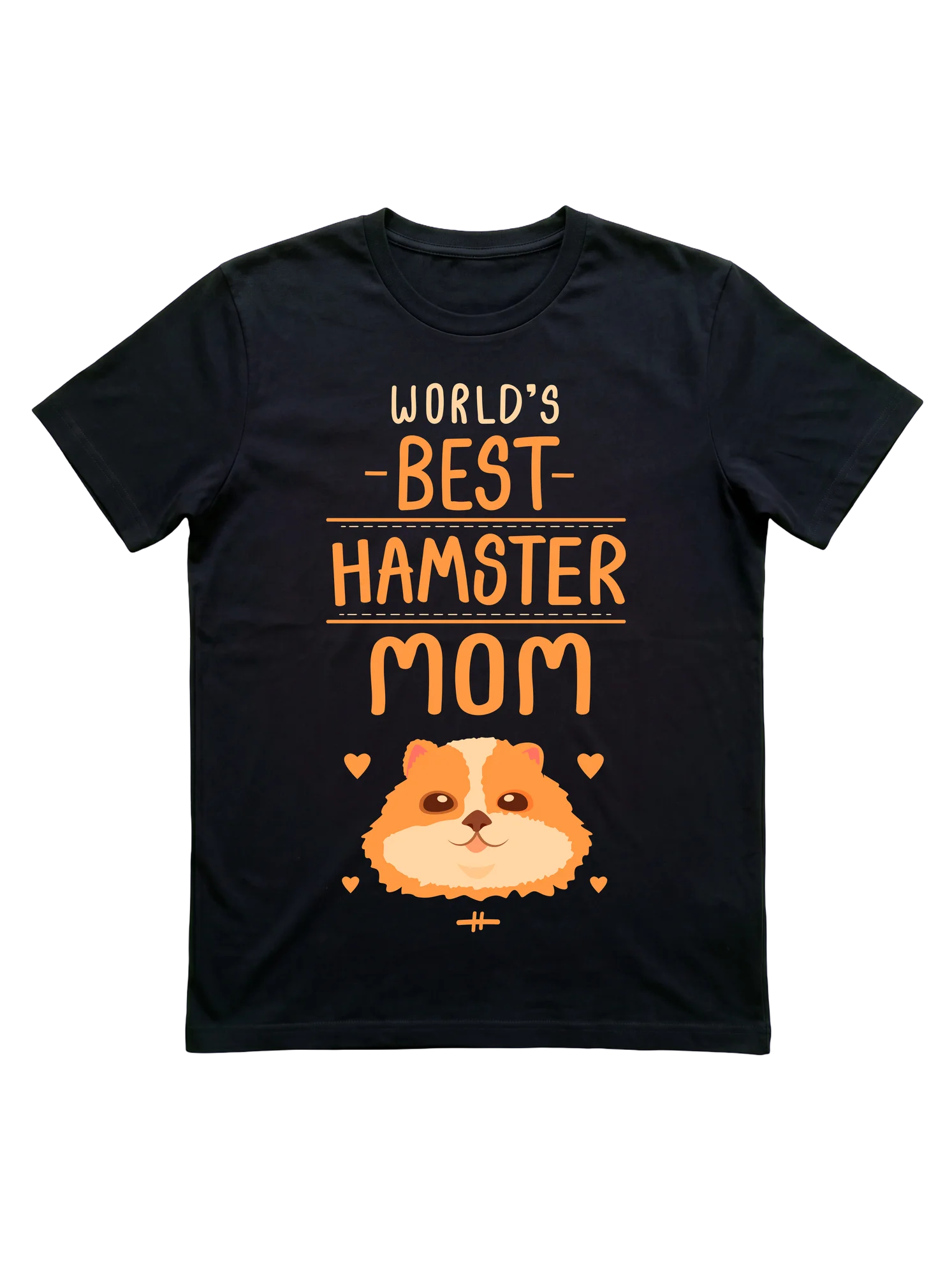
- Speaks to the Hamster Mom whose bag always carries a small carrier and emergency timothy-hay stash for unexpected vet stops.
Sponsored · affiliate link