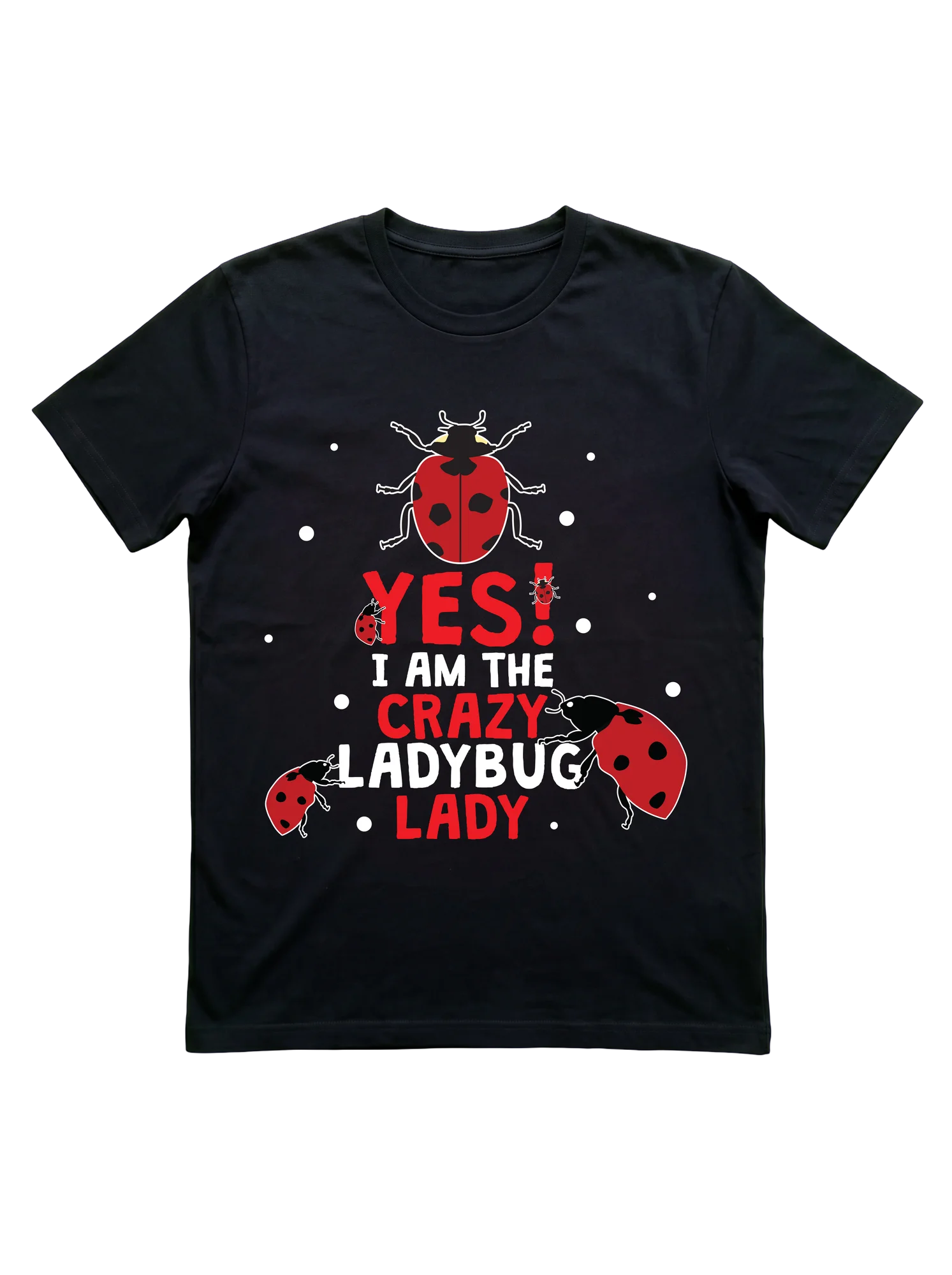
Three ladybugs and one bold confession in stacked red type
Three red-and-black ladybug illustrations sit at staggered scales across a black field, each white-outlined with visible leg detail and surrounded by scattered white dots that read as flying spots. Bold stacked type spells YES I AM THE CRAZY LADYBUG LADY in alternating red and white with a clear size hierarchy, the joke landing in one read. This ladybug t-shirt slips into weekend garden-center runs where someone's loading flats of marigolds onto a wagon and stopping at every plant tray to spot live beetles among the leaves.
- Stands out:
- Three different ladybug sizes scattered across the field give the design a found-them-everywhere energy that flat single-bug graphics miss.
- Worth considering:
- Loud confession humor: someone who prefers a quiet pocket ladybug graphic may find the all-caps line too direct.
- Right for:
- For the ladybug lover whose kitchen windowsill is half garden journal and half rescue jar.
Sponsored · affiliate link