
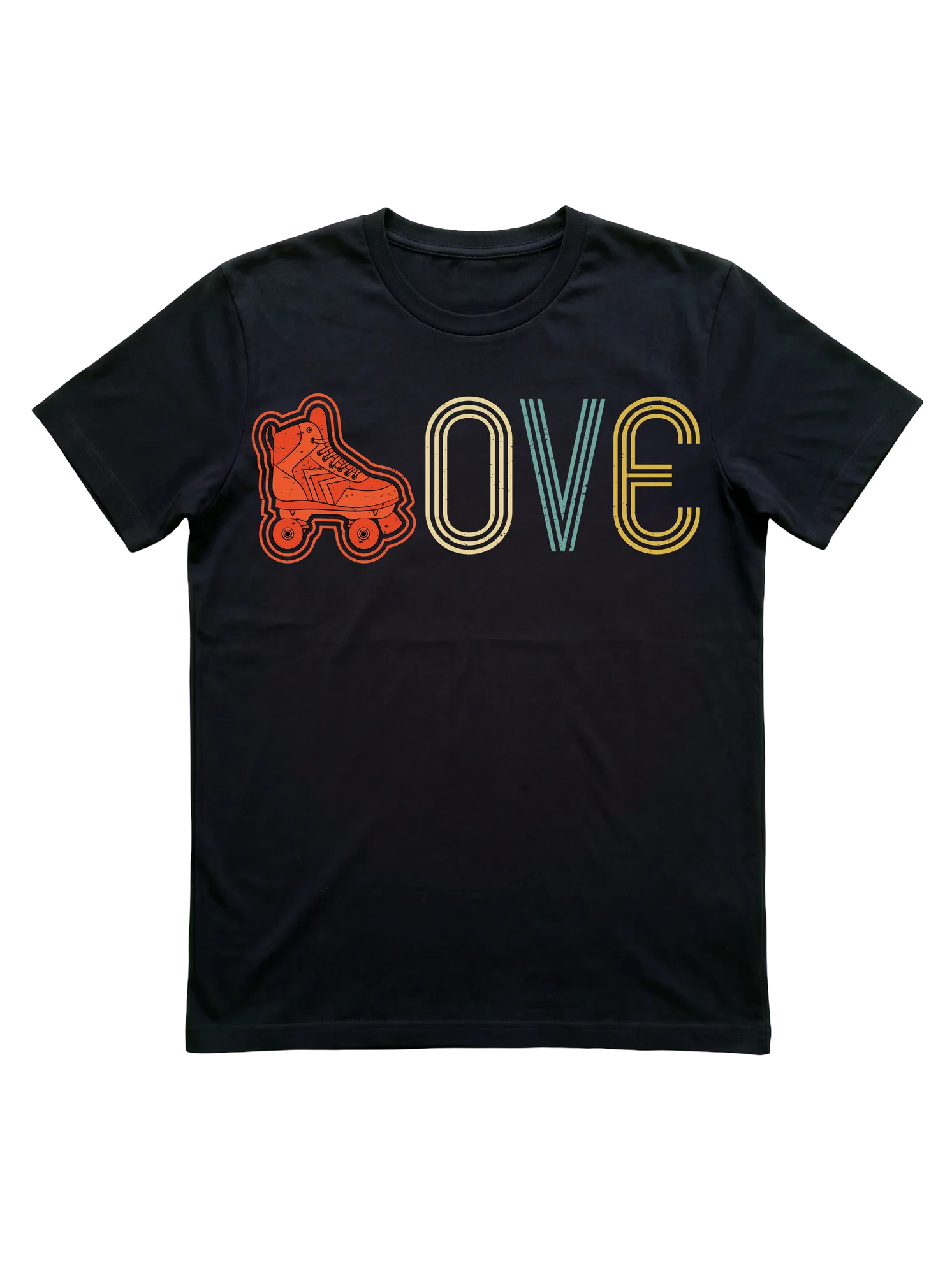
Roller Skating LOVE T-Shirt with Retro Quad Skate Design
As an Amazon Associate, HoldMyTee earns from qualifying purchases. This does not change the price for you. Learn more →
A red quad skate replaces the L in retro multiline "LOVE" lettering across cream, teal, and gold on this roller skating tee, which reads the identity at a glance across rink nights and outdoor skate sessions. Fits the skater who keeps rolling every weekend.
Save to PinterestAbout this design
The lace-tighten pause before stepping from carpet onto rink floor. Quad wheels carry a specific rumble on maple boards that the roller disco generation still identifies on contact, a sensory marker that separates the quad skating crowd from everyone else in the room.
This design translates that identity into a single typographic move. LOVE is spelled across a black field, the L replaced by a detailed orange-red quad roller skate illustration with visible lacing and a full quad wheel set. The remaining letters, O, V, and E, appear in retro triple-stripe typography: cream, teal-blue, and mustard-gold respectively. Each letter is outlined in the layered stripe style that defined late 70s and early 80s graphic design. The composition sits in the upper portion of the shirt and reads cleanly from across a rink floor.
Who this is for
This design reads primarily to the quad skater crowd who arrived at the sport through roller disco heritage or the early 2020s retro revival rather than through derby or park skating. The color palette, that specific combination of warm cream, retro teal, and mustard gold against black, is a recognizable visual shorthand for the 70s rink era. Roller Girls who lean into the vintage register will clock the typography style as deliberate, not incidental.
It also functions for the skater who wants a LOVE statement that stays legible to anyone but rewards closer inspection with the quad-skate-as-letterform detail. The message is on the surface; the niche specificity is in the execution.
Gift occasions
The design works across roller rink days, roller disco events, and skate jams where vintage aesthetic is part of the social fabric. Roller Skate Moms who skated in the disco era and returned to the rink will read the visual language immediately. For those shopping for a quad skater who already has the gear sorted, this offers a wardrobe entry point rather than equipment.
Why this design fits the niche
The roller skating revival that took hold in the early 2020s pulled visual language directly from late 70s and early 80s rink culture: warm color palettes, quad skate iconography, and type treatments that reference rink signage and skating-show programs from that period. This design uses all three. The triple-stripe letterforms and the orange-red skate illustration against black sit at the center of that visual tradition. Within the roller skating hub, this reads identity-wear rather than novelty graphic, the kind of shirt that signals the hobby without requiring explanation to the room.
Styling tips
The black base keeps the retro color block from reading costume-level on a rink day. High-waisted shorts or wide-leg pants align naturally with the 70s visual register the design is working in. At a skate jam or outdoor boardwalk skate sesh, the triple-stripe lettering holds its readability from a distance.
How does this compare?
The LOVE design sits in the text-forward corner of the roller skating hub, using the quad skate only as letterform within a word rather than as a standalone illustrated character. Compare that to the Vintage Roller Skating T-Shirt with 80s Neon Quad Skates, which leads with the skate as central graphic element against a brighter, more saturated field, or the Vintage Roller Girl T-Shirt with Retro 80s Sunset, which layers figure illustration and scenic backdrop behind the type. All three share the retro 70s/80s palette territory, but the LOVE design keeps the composition tighter: one word, one illustrated detail, minimum elements. The result reads closer to a typography piece than a character composition, which shifts how it wears in contexts outside the rink.
This comparison reflects our editorial picks for the niche.
Related in this hub
Frequently asked questions about Roller Skating shirts
- What's the difference between a roller skating tee for a quad skater versus a derby player?
- Quad-skater designs typically feature the full quad silhouette, often retro or rink-oriented, and use vocabulary like let's roll, skate sesh, or life is better on wheels. Derby designs lean into league-internal language: jammer, blocker, pivot positional callouts, fresh meat humor, or track rat identity claims. A quad skater might wear either, but a derby player rarely wears a generic disco tee to scrimmage because it reads as wrong context for league play.
- Do jam skating designs read differently from general roller skating designs?
- Jam skating designs pull dance and motion vocabulary into the typography itself. Phrases like that's my jam, skate sesh, or rolling deep often get layout treatments that suggest rhythm or movement. General roller skating designs are more static, anchored around the skate silhouette or a slogan. A jam skater wearing a generic rink design reads fine, but the inverse, a rink regular in a jam-skating-coded shirt, signals dance-floor identity that may not match.
- What sizing works for a tee worn over a sports bra at derby scrimmage?
- Derby scrimmage and bout wear usually trends one size up from street fit, since skaters layer over a sports bra and need range of motion through shoulder and torso during blocking and pivot rotations. Many derby players keep separate tee rotations for league wear and street wear, with the league-wear tees sized looser. For casual rink wear and roller disco nights, standard street fit works fine.
- Are retro disco roller skating designs taken seriously, or do they read as costume?
- Retro 70s and 80s designs read as authentic skating heritage to most niche audiences, not as costume. The roller disco aesthetic predates current skating culture and is treated as core nostalgia rather than dress-up. Sunburst typography, boardwalk silhouettes, and disco-era color blocking land cleanly at roller disco nights and Friday rink sessions. The exception is fully period-styled gold-lamé treatments, which cross into theme territory.
- What design language signals fresh meat versus established derby player?
- Fresh meat designs lean into the rookie identity directly, sometimes with humor about the early training phase, the bruise count, or the steep first-year learning curve. Established player designs use positional language (jammer, blocker, pivot), track rat identity claims, or bout-count humor. A skater in their first six months often gravitates toward fresh meat graphics as a way to own the rookie status, while veterans default to positional or league-anchored designs.
- Why do most quad-skater designs avoid inline-skate silhouettes entirely?
- Quad and inline skating split the broader roller skating world into two cultures that share wheels but little else in style, vocabulary, or community. Quad skaters identify strongly with the four-wheel two-by-two silhouette and toe-stop profile, and designs that show inline outlines read as wrong audience. Most roller disco, derby, and jam skating designs explicitly use the quad outline. Inline-coded designs sit in a separate rollerblading category with its own visual language.
- Which roller skating designs work for both rink sessions and casual street wear?
- Statement-text designs (life is better on wheels, keep rolling, skating is therapy) and retro-disco graphics with sunburst typography cross over cleanly. Both read as identity wear off-skate and as belonging on-skate. Derby-positional designs and fresh meat graphics tend to stay closer to league contexts, since the vocabulary signals league membership to anyone who recognizes it. For a skater who wants one tee that works rink, boardwalk, and grocery run, the slogan-and-silhouette designs travel furthest.
Also in
You might also like
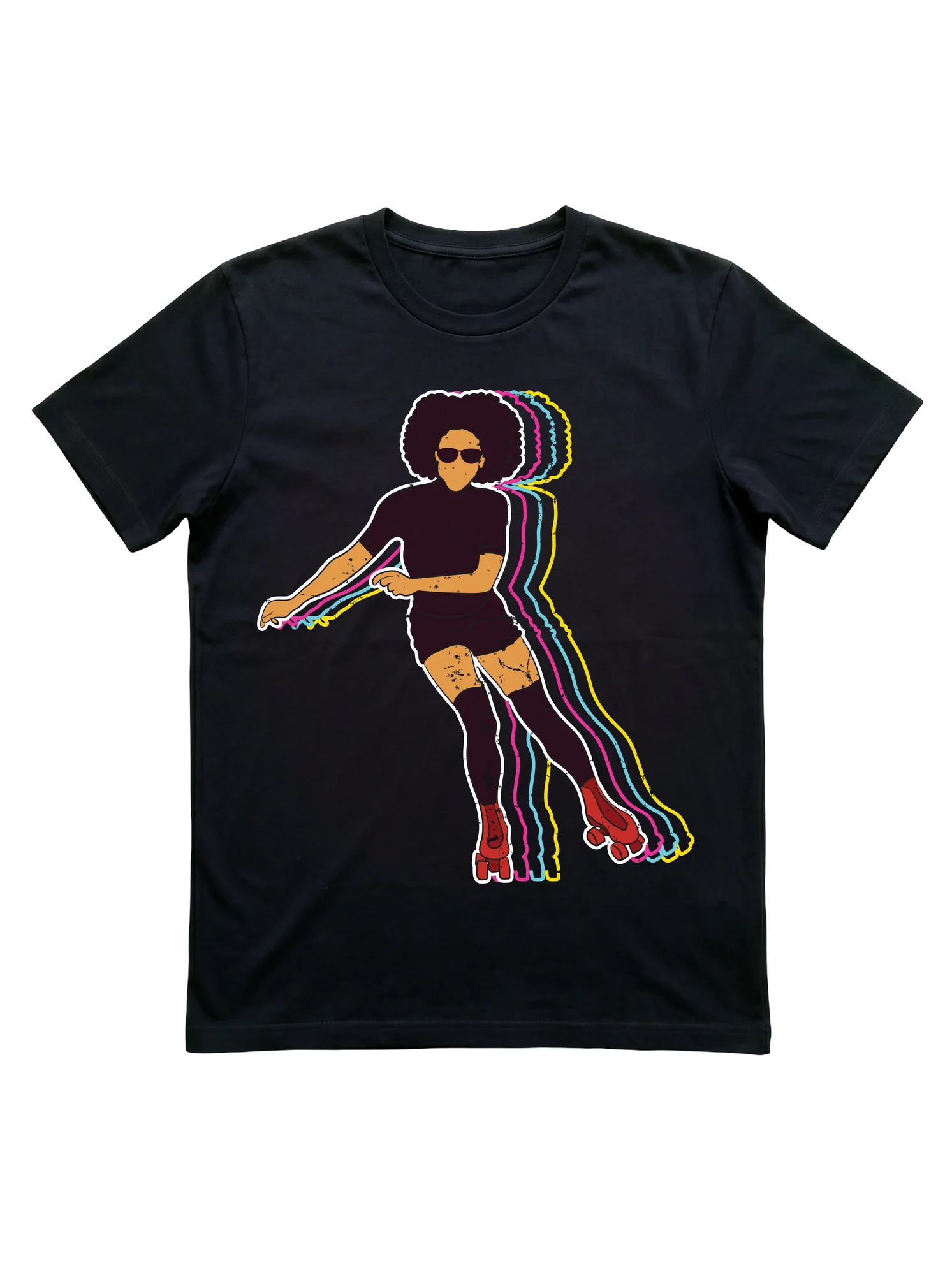 Retro 70s Roller Skating T-Shirt for WomenRoller Skating
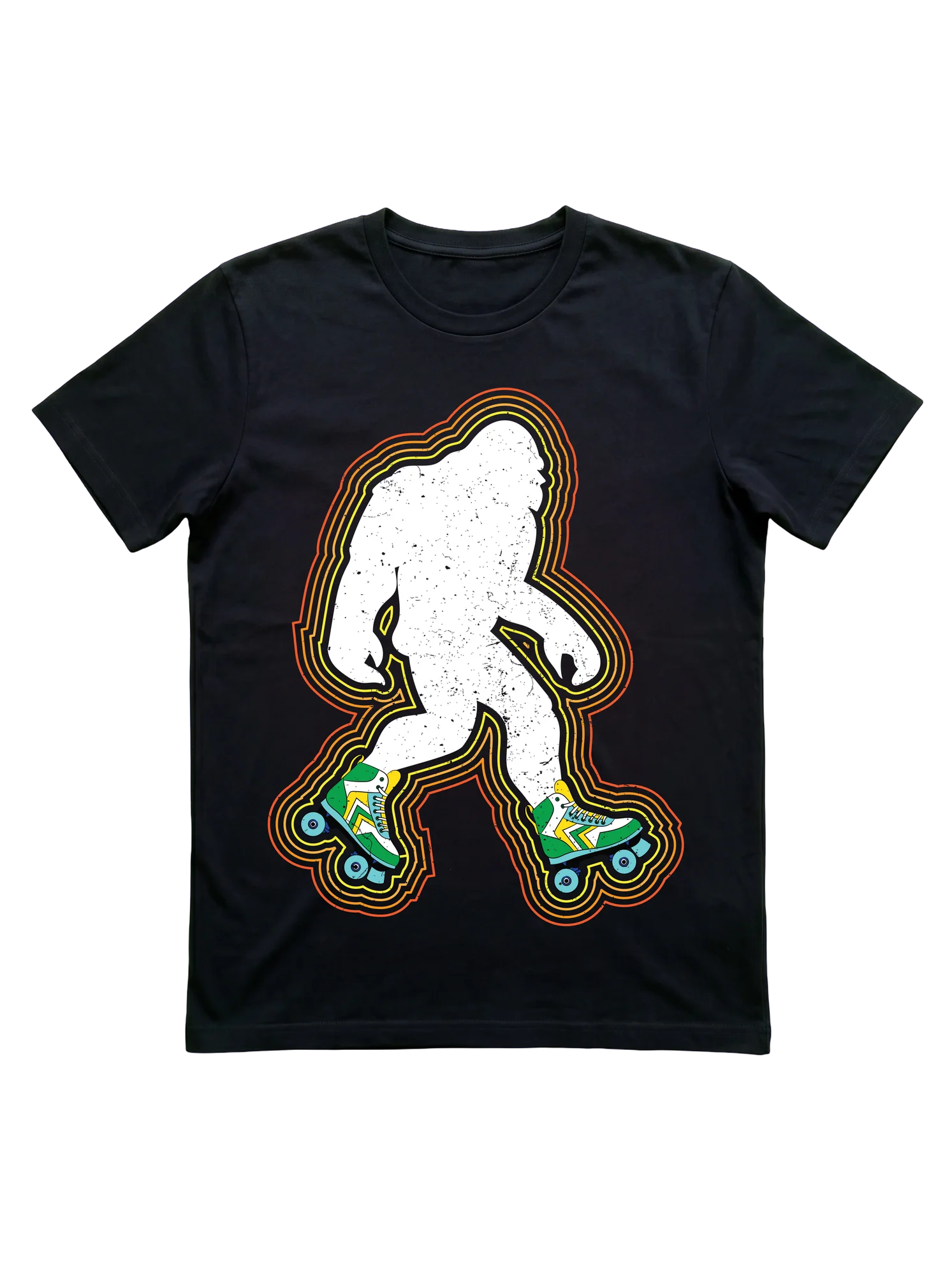 Bigfoot Roller Skating T-Shirt: Retro Quad Skater DesignRoller Skating
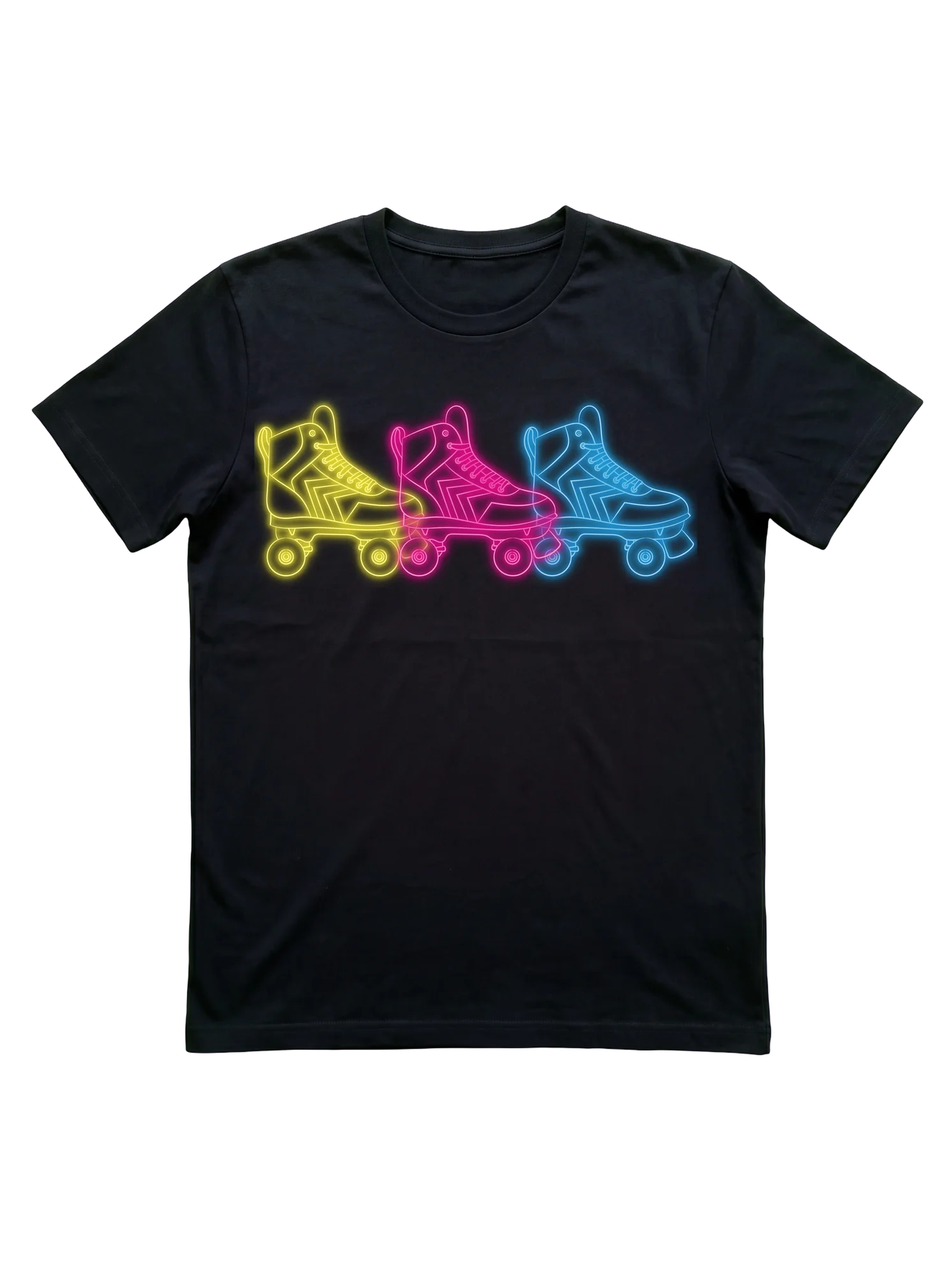 Vintage Roller Skating T-Shirt with 80s Neon Quad SkatesRoller Skating
 Roller Skating Sloth T-Shirt for Rink LoversRoller Skating
 Vintage Roller Girl T-Shirt with Retro 80s SunsetRoller Skating
 80s Retro Roller Skating Shirt for Rink LoversRoller Skating