
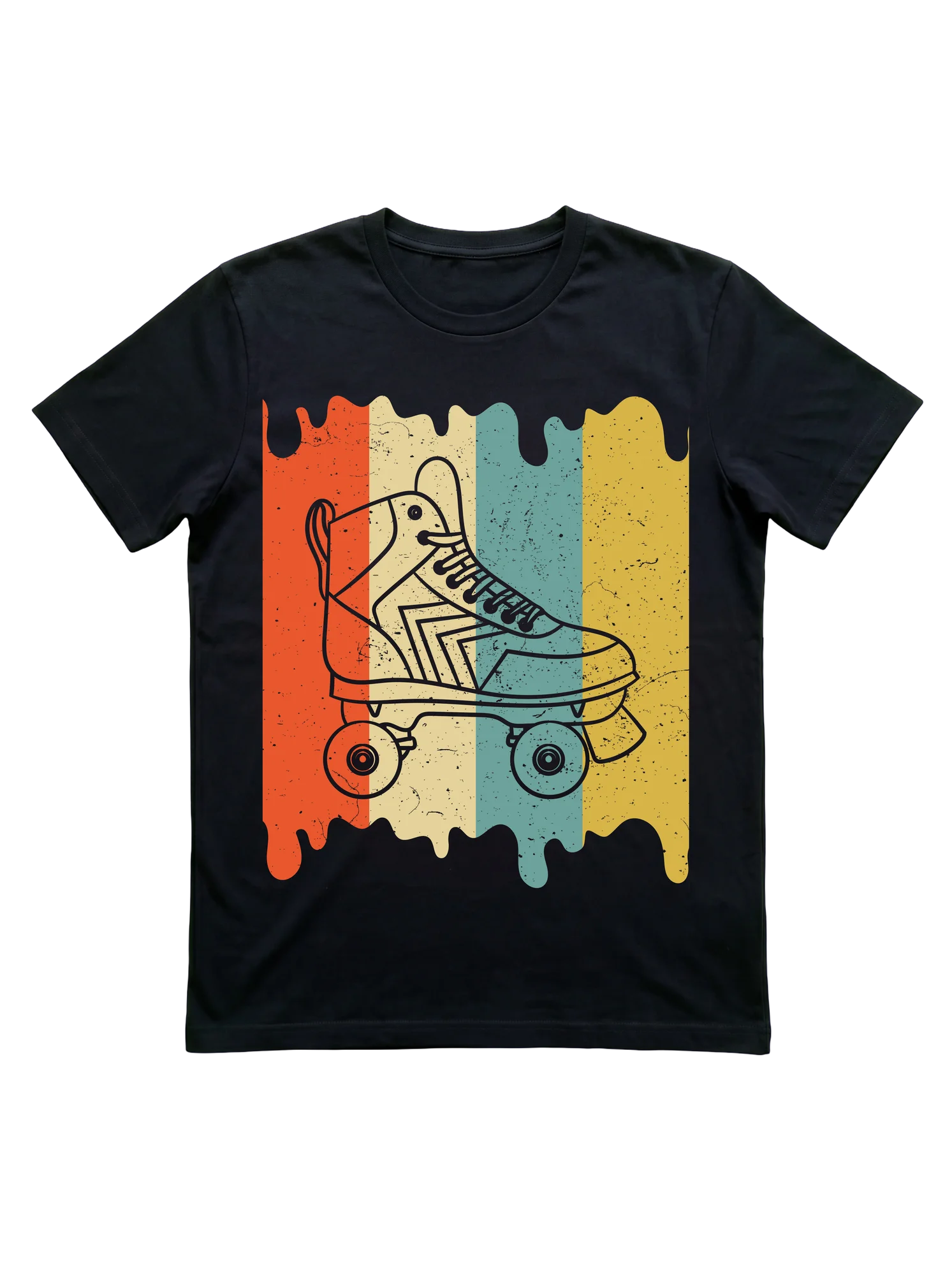
80s Retro Roller Skating Shirt for Rink Lovers
As an Amazon Associate, HoldMyTee earns from qualifying purchases. This does not change the price for you. Learn more →
A line-art quad skate sits over four dripping retro stripes, orange, cream, teal, and gold, with a distressed texture throughout on this roller skating shirt, which reads vintage-era identity at rink nights and outdoor skate sessions. Fits the roller skating lover who keeps the 70s aesthetic rolling.
Save to PinterestAbout this design
The hardwood hum when a full rink rounds a curve together, wheels clicking into rhythm, lands differently than any song cue. This roller skating shirt draws from that same register.
The composition centers a classic quad skate in black outline art on four vertical color bands: red-orange, cream, teal, and golden yellow, edged at top and bottom with a dripping-paint border. A distressed grain texture runs across the full field, giving the surface the look of a rink flyer printed on coarse paper and pinned to a wall long enough to absorb the ambient light of the hall. No slogan, no stacked typography. The skate carries all the communication.
The color palette is specific to a particular era of rink culture: the 70s and 80s combination that shows up on vintage boot colorways, rink floor tile patterns, and roller disco event graphics from that period. Wearers who have spent time in that reference pool recognize the shorthand without needing it labeled.
Who this is for
Three reader types find a connection with this design. Roller girls and long-time quad skaters who treat the color palette as a cultural identifier, not a trend signal. Skater moms who have watched the rink revival bring new crowds to their home rinks and prefer a design that reads as cultural knowledge rather than a trend import. And gift buyers looking for something that lands with the niche visually without relying on verbal slogans or character-based illustrations.
The image-forward composition, no figure, no lettering, no motion, sits without the declarative text common across the roller skating category. That makes it quieter in one sense and more specific in another: it points to the culture without broadcasting to anyone outside of it.
Gift occasions
The image runs without seasonal text or occasion markers, which keeps it usable year-round. Skate jams, roller disco nights, and regular rink sessions are the obvious wearing contexts. For gift purposes, the design reads most clearly for the skater in someone's life whose connection to quad skating is a defining habit rather than a seasonal activity. The retro palette signals the culture in a way that resonates with both long-time skaters and those freshly converted by the rink revival.
Why this design fits the niche
Across the roller skating category, the majority of graphic prints lean on verbal statements, slogans, or character-based motion illustrations. This design holds to the image alone: a quad skate rendered in clean line art without color fill. That restraint marks it as part of a smaller group within the category, where the skate as a standalone icon carries the full weight of the cultural reference without text support.
Styling tips
High-waisted jeans and white leather sneakers carry the 80s rink register into a full look for outdoor boardwalk sessions. A fitted long-sleeve underneath works for colder rink interiors without hiding the print. The centered composition clears most jacket lapels when layered. Casual enough for a skate sesh, put-together enough for the post-rink meal.
How does this compare?
"Vintage Roller Skating T-Shirt with 80s Neon Quad Skates" runs the same era reference but pushes the palette into neon saturation, giving that design a louder visual presence at distance. This design uses muted earth tones, red-orange, cream, teal, and gold, with the skate rendered as an unfilled outline. Quieter at arm's length, but sharper in the way it references rink poster graphics from the pre-neon era.
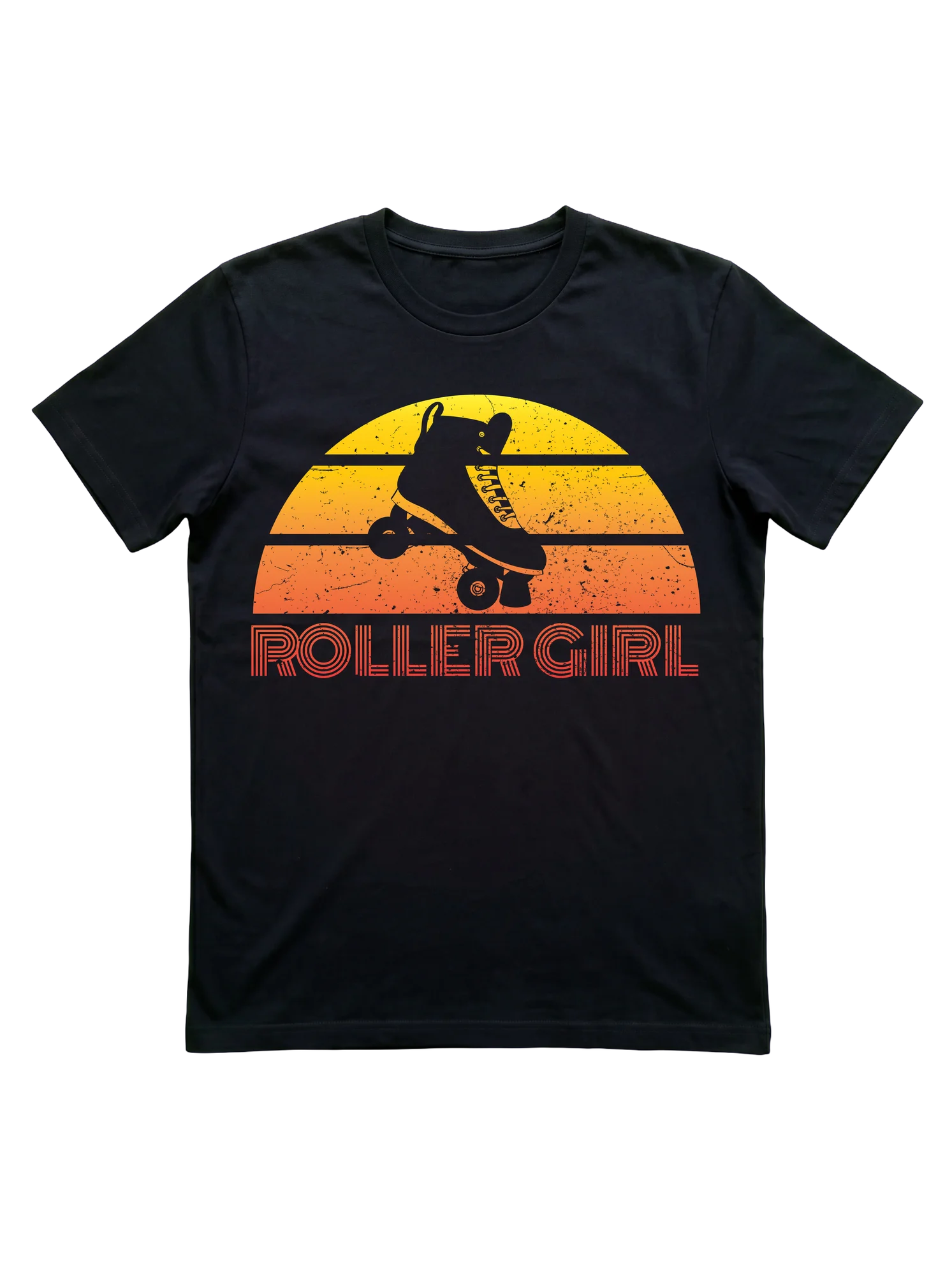
"Vintage Roller Girl T-Shirt with Retro 80s Sunset" introduces a figure-in-motion format with a gradient background, giving it a narrative and movement quality. This design stays with a single static object: no figure, no motion blur. For skate jams or roller disco contexts where a still icon suits the occasion better than an action scene, the two read as distinct choices rather than interchangeable alternatives.
The "Bigfoot Roller Skating T-Shirt: Retro Quad Skater Design" moves into absurdist character illustration territory, a register the current design avoids entirely.
This comparison reflects our editorial picks for the niche.
Related in this hub
- Vintage Roller Girl T-Shirt with Retro 80s Sunset
- I Skate Like a Girl Roller Skating T-Shirt
- Roller Skating Sloth T-Shirt for Rink Lovers
- This Is My Roller Skating Shirt for Rink and Skate Sessions
- Roller Skating LOVE T-Shirt with Retro Quad Skate Design
- I'm In My Office Roller Skating Shirt for Quad Skaters
Frequently asked questions about Roller Skating shirts
- What's the difference between a roller skating tee for a quad skater versus a derby player?
- Quad-skater designs typically feature the full quad silhouette, often retro or rink-oriented, and use vocabulary like let's roll, skate sesh, or life is better on wheels. Derby designs lean into league-internal language: jammer, blocker, pivot positional callouts, fresh meat humor, or track rat identity claims. A quad skater might wear either, but a derby player rarely wears a generic disco tee to scrimmage because it reads as wrong context for league play.
- Do jam skating designs read differently from general roller skating designs?
- Jam skating designs pull dance and motion vocabulary into the typography itself. Phrases like that's my jam, skate sesh, or rolling deep often get layout treatments that suggest rhythm or movement. General roller skating designs are more static, anchored around the skate silhouette or a slogan. A jam skater wearing a generic rink design reads fine, but the inverse, a rink regular in a jam-skating-coded shirt, signals dance-floor identity that may not match.
- What sizing works for a tee worn over a sports bra at derby scrimmage?
- Derby scrimmage and bout wear usually trends one size up from street fit, since skaters layer over a sports bra and need range of motion through shoulder and torso during blocking and pivot rotations. Many derby players keep separate tee rotations for league wear and street wear, with the league-wear tees sized looser. For casual rink wear and roller disco nights, standard street fit works fine.
- Are retro disco roller skating designs taken seriously, or do they read as costume?
- Retro 70s and 80s designs read as authentic skating heritage to most niche audiences, not as costume. The roller disco aesthetic predates current skating culture and is treated as core nostalgia rather than dress-up. Sunburst typography, boardwalk silhouettes, and disco-era color blocking land cleanly at roller disco nights and Friday rink sessions. The exception is fully period-styled gold-lamé treatments, which cross into theme territory.
- What design language signals fresh meat versus established derby player?
- Fresh meat designs lean into the rookie identity directly, sometimes with humor about the early training phase, the bruise count, or the steep first-year learning curve. Established player designs use positional language (jammer, blocker, pivot), track rat identity claims, or bout-count humor. A skater in their first six months often gravitates toward fresh meat graphics as a way to own the rookie status, while veterans default to positional or league-anchored designs.
- Why do most quad-skater designs avoid inline-skate silhouettes entirely?
- Quad and inline skating split the broader roller skating world into two cultures that share wheels but little else in style, vocabulary, or community. Quad skaters identify strongly with the four-wheel two-by-two silhouette and toe-stop profile, and designs that show inline outlines read as wrong audience. Most roller disco, derby, and jam skating designs explicitly use the quad outline. Inline-coded designs sit in a separate rollerblading category with its own visual language.
- Which roller skating designs work for both rink sessions and casual street wear?
- Statement-text designs (life is better on wheels, keep rolling, skating is therapy) and retro-disco graphics with sunburst typography cross over cleanly. Both read as identity wear off-skate and as belonging on-skate. Derby-positional designs and fresh meat graphics tend to stay closer to league contexts, since the vocabulary signals league membership to anyone who recognizes it. For a skater who wants one tee that works rink, boardwalk, and grocery run, the slogan-and-silhouette designs travel furthest.
Also in
You might also like
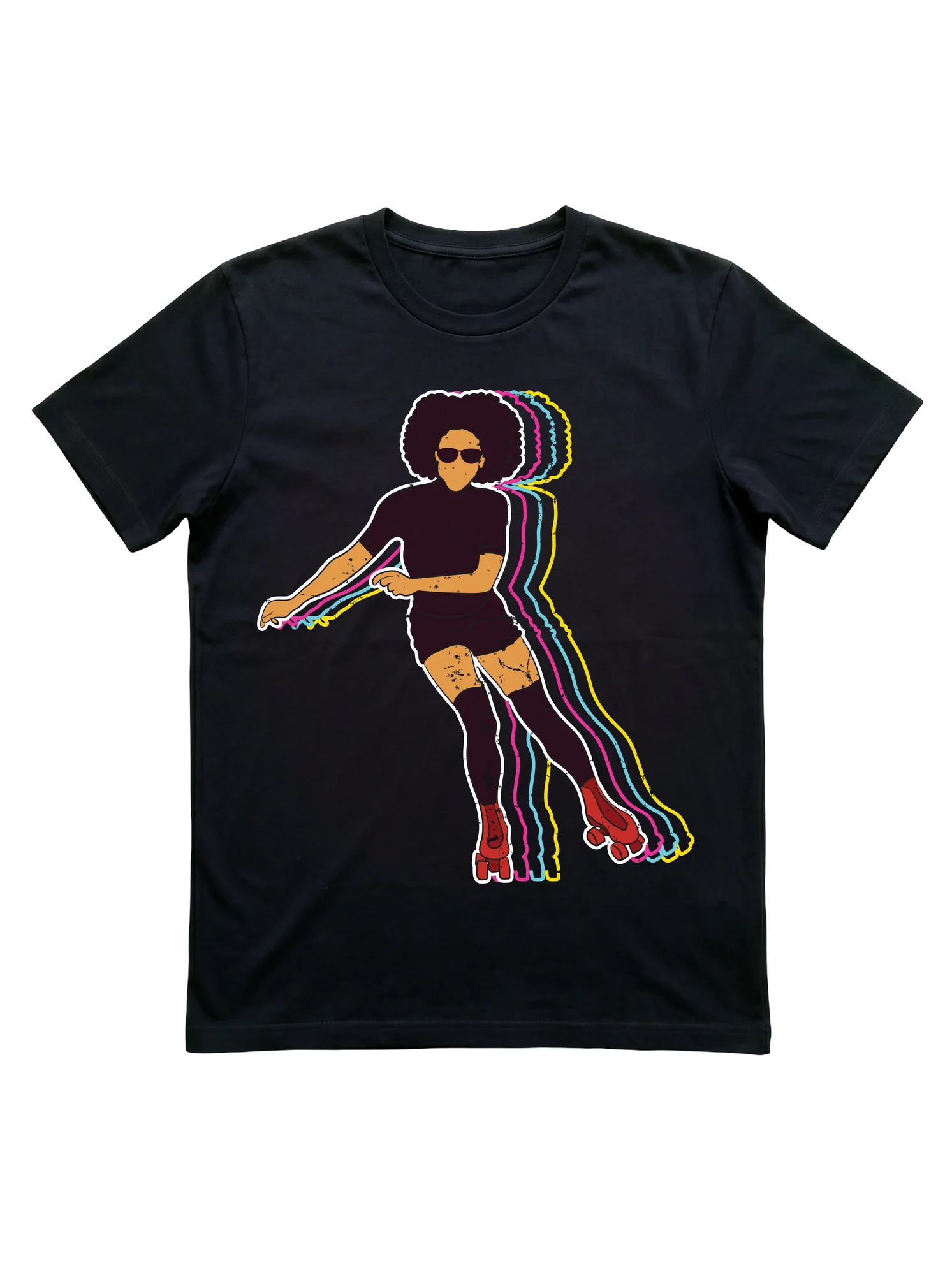 Retro 70s Roller Skating T-Shirt for WomenRoller Skating
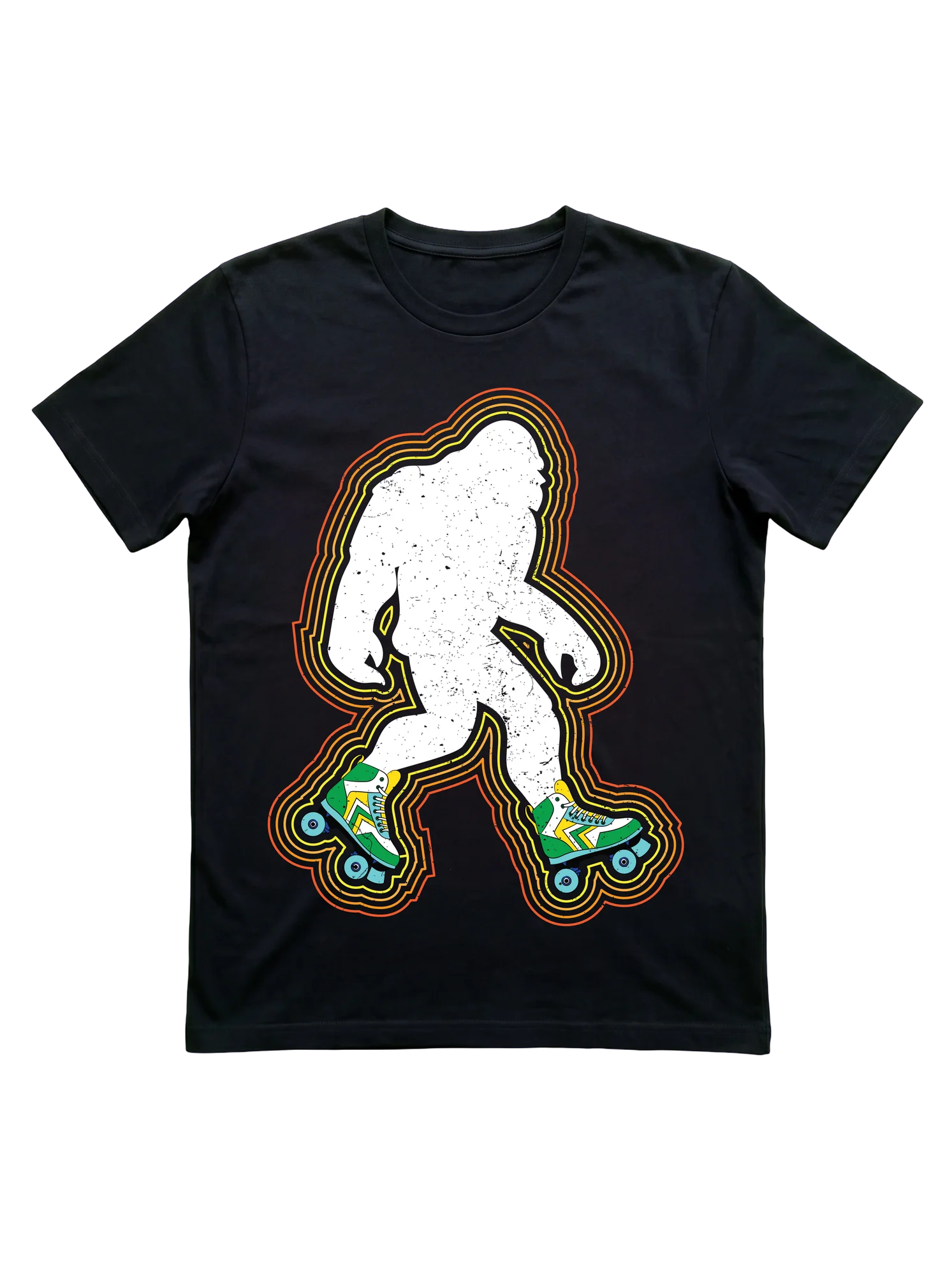 Bigfoot Roller Skating T-Shirt: Retro Quad Skater DesignRoller Skating
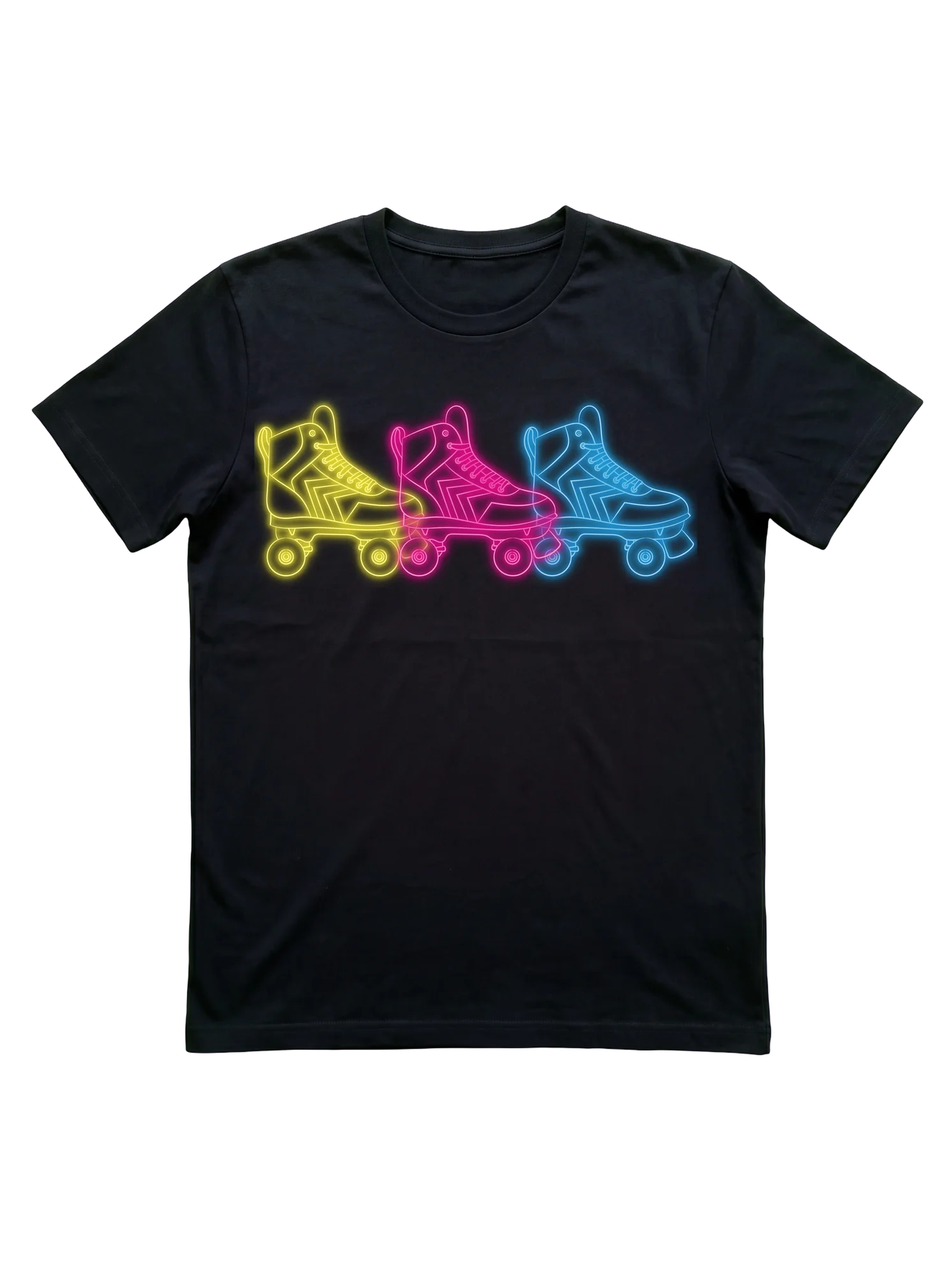 Vintage Roller Skating T-Shirt with 80s Neon Quad SkatesRoller Skating
 Roller Skating LOVE T-Shirt with Retro Quad Skate DesignRoller Skating
 Roller Skating Sloth T-Shirt for Rink LoversRoller Skating
 Vintage Roller Girl T-Shirt with Retro 80s SunsetRoller Skating